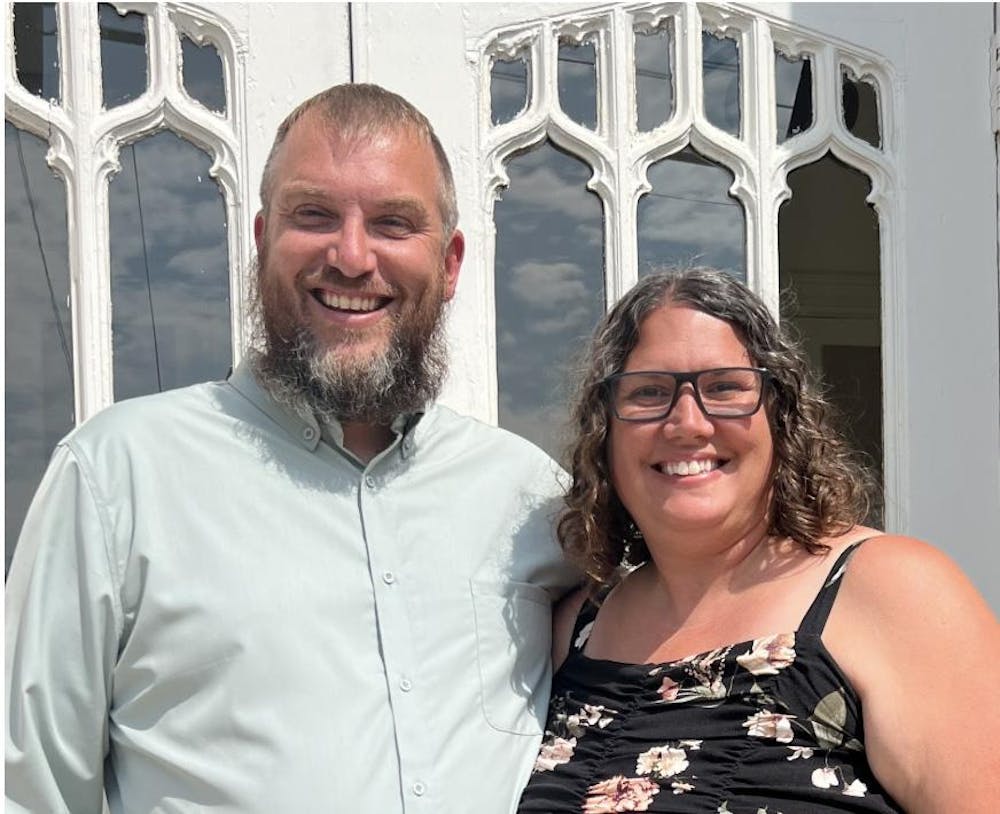
This week The Oceana Echo shares the second article in its two-part series meant to recognize the heroic efforts of bystanders, to encourage others to become CPR-certified and to invite the community to get behind an effort to raise funds for an AED unit in every police cruiser in the county!
According to the American Heart Association, a sudden onset of cardiac arrest is different from a heart attack. With a sudden cardiac arrest, the heart suddenly stops beating. The condition is usually caused by an electrical problem with the heart that makes it beat irregularly. When a cardiac arrest occurs, the person becomes unresponsive, stops breathing and becomes pulseless. Doing CPR (cardiopulmonary resuscitation) right away can double or triple a person’s chances of survival, as it pumps needed blood to the brain, lungs and other vital organs.
With a heart attack, symptoms can be sudden or take place over a period of hours or days. The heart usually keeps beating, but blood cannot get to part of the heart because a key blood vessel is blocked. If the problem is not cleared quickly, the part of the heart not getting enough blood can start to die.
Here is another “heartwarming” story of how performing CPR on someone experiencing a cardiac arrest saved another life in Oceana County.
It was a very warm night in July, while wrapping up a 4-H beef club meeting prior to the fair, when, for no apparent reason, 4-H mom and mother of five, Jodi (Hovey) Guikema, experienced a cardiac arrest.
4-H mom and registered nurse Heather Hallack remembers, “The moms had just gathered up and were discussing last-minute fair details when Jodi collapsed…literally at my feet. Another 4-H mom, Victoria (Walker), also a registered nurse, immediately called for Jodi’s husband, John. I dropped to my knees, looked right at Cory (Slotman), whose farm we were at, and told him to call 911. As I turned to start helping Jodi, I remember hoping she’d fallen, got kicked, or tripped - anything other than what, I knew from my past experience, had probably just happened. I checked for Jodi’s pulse, then immediately started chest compressions while Victoria started rescue breathing.”
Walker and Hallack have almost 40 years of combined registered nursing between the two of them and literally worked side by side from 2008 to 2023. Hallack explained that in a hospital environment when a “code blue” is called, the scene, though chaotic, becomes a very controlled environment. “You have monitors on the patient. You have half a dozen medical personnel, supplies, medications at your disposal and a doctor at the foot of the bed. Every single person in the room has a role. To be two nurses out in the middle of a cow pasture, with no equipment or support, was truly humbling. All of our past knowledge and experience had to kick in.”
Hallack said it was about 15 minutes before the first emergency vehicle arrived, “God bless Fred Hutson of the Oceana County Sheriff Department (OCSO)! He showed up with an AED and knew exactly what to do. We worked together, the three of us, just like a machine, shock, CPR, repeat.”
While Hallack and Walker were performing CPR, they were both laser-focused and had no idea what everyone else was doing. But in the hours following, as she debriefed with family and friends, Hallack learned that every single person there filled an important role. “It is common for health care providers to debrief after any significant medical event, and I knew I needed to debrief as well. I found out one of the moms had taken the little kids over the hill to the trampoline. Other parents were making phone calls and troubleshooting. The older kids were moving vehicles and directing traffic. When I asked my daughter Grace what everyone was doing while we were working on Jodi, she said, ‘If you didn’t have a specific job, you were praying.’
“It's a blur, but yet I can recall so many things with great detail,” Hallack said. “As the minutes passed, multiple volunteer first responders arrived on scene to assist. Finally, 30 minutes from our first 911 call, Life EMS arrived. People need to realize we only have three designated ambulances in Oceana County (1,300 square miles). They are responsible for serving the county’s 27,000 residents, plus the thousands of visitors who visit Oceana during the summer. I don’t fault anyone for it taking 30 minutes to arrive. They aren’t just sitting around waiting for a call, they may be transporting a patient or taking a call on the other end of the county. It just goes to prove that in a rural area we can’t solely rely on ambulances.”
With Life EMS on the scene, Guikema was given an advanced airway. Hallack asked them, as they were now in charge of the event, if they could shock Jodi one more time. “Then I asked for a pulse check, and the most glorious thing happened — Jodi had a pulse! CPR was no longer indicated! In the medical field, we call it ROSC, Return Of Spontaneous Circulation. I call it a miracle!
“There’s no doubt in my mind the AED unit from the OCSO patrol car saved her life; and what a beautiful life Jodi has! She's a wife, a mom, and a strong, faithful woman who was able to go home to her family less than two weeks later,” Hallack exclaimed.
“On the evening of July 28, I suffered from an ‘out of hospital ventricular tachycardia/ventricular fibrillation cardiac arrest,'” Jodi Guikema shared. “July 28 was a normal day; nothing felt out of the ordinary. I have since learned that cardiac arrest is different from a heart attack in this way. That day, God placed just the right people in my path to sustain my life. I received a defibrillator during my short hospital stay and have recently returned to work full-time. Having people who know CPR and/or have access to an AED, is critical for cardiac arrest victims, as there are no warnings that you are having a heart problem.”
Currently, there are 18 OCSO road vehicles, but only eight are equipped with an AED. “In our rural area, we rely so heavily on our local law enforcement officers and volunteer first responders, we need them to have the equipment to help our community in situations like this one,” said Hallack.
Hallack is currently campaigning to raise funds to purchase the remaining 10 AEDs needed. “Each unit costs $1,800, but when considering the lives that could be saved, they are worth every penny! I’ve given my children a challenge match. Whatever they donate out of their 4-H beef auction sale checks, I’ll match toward the goal needed. So much of what 4-H stands for was on display that night. (The 4-H pledge states, “I pledge my head to clearer thinking, my heart to greater loyalty, my hands to larger service and my health to better living, for my club, my community, my country and my world.”) I’ve since learned that any 4-H member can receive a non-club point for completing CPR certification.”
Hallack is partnering with multiple community organizations to share this compelling story and request donations toward the purchase of the 10 AEDs needed.
For those interested in giving to this important campaign, an “AED Oceana County Sheriff Dept” fund has been established at the Shelby State Bank. Individuals or groups may make deposits directly to the bank or mail checks made out to “AED Oceana County Sheriff Dept,” in care of Heather Hallack, 362 N. 112th Ave., Hart Mich. 49420. If a digital option is preferred, or for other questions, please email hajhallack@icloud.com.
For anyone interested in receiving training in CPR or taking a refresher course, please visit www.redcross.org to find a variety of training and recertification options.