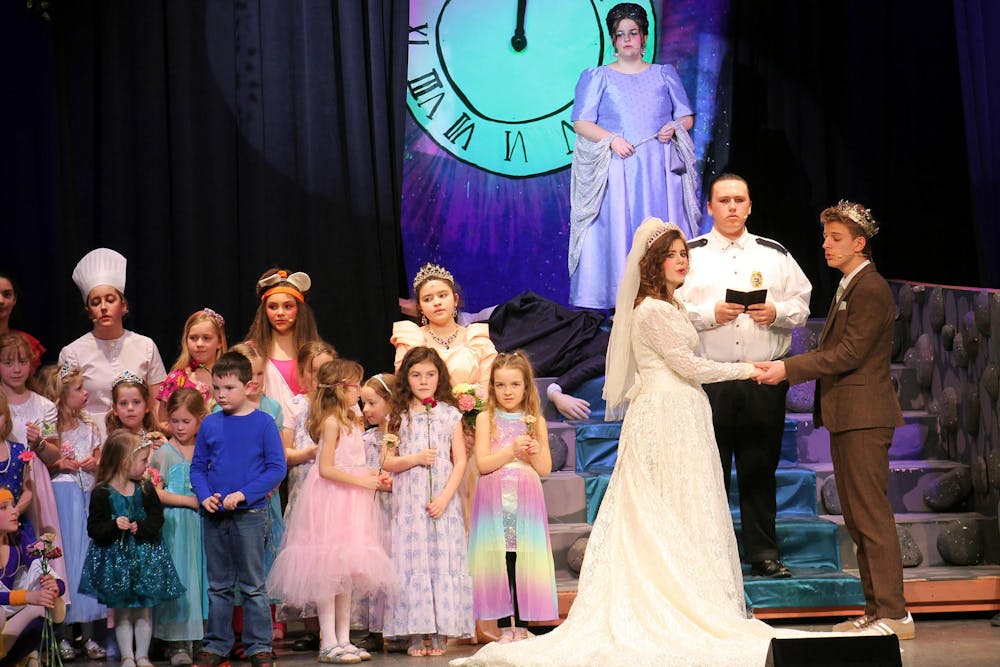
There are about as many versions of the story of Cinderella as there are facets in a Swarovski crystal replica of the titular princess’s glass slippers. The basics are relatively the same - a girl made into an indentured servant by evil family members is given the opportunity to attend a ball, clothed in accoutrements gifted by magical means. There at the ball, she outshines the rest of the young ladies in attendance until she is forced to run away before her magic wears off, but not before wooing the prince and leaving behind a shoe. This iconic shoe (which varies in precious material) is then used to track her down, and she is married to the prince. End scene, happily ever after, exit pursued by bear (or rather, carnivorous birds if you’re the Grimm brothers.)
The oldest versions of the story were developed independently in Greece and China over two-thousand years ago, but the most memorable versions of the fairy tale are the French and German versions. The French “Cendrillon ou a la petite pantoufle de verre” (Cinderella or the Little Glass Slippers) first appeared in Charles Perrault’s 1697 collection of moral tales, known today as the “Mother Goose Tales.” This version sees some of the more recognizable characteristics of the story - a fairy godmother, pumpkin carriage, and glass slippers - and is the one used as the basis for the 1950 Disney animated film.
My personal favorite is the Grimm Brothers’ “Aschenputtel,” as the version I had was the one with illustrations by Arthur Rackham. You will probably recognize it as the version with the stepsisters cutting off their toes and heels to fit in the slipper, only to have songbirds peck out their eyes. Despite being touted as “the real Cinderella fairytale with all the blood Disney was too family friendly to make,” the Grimm version was printed about a century after Perrault’s. However, both Perrault and the Grimms were not inventors of the tales, merely compilers of existing old wives' tales.
When it comes to Cinderella musicals, however, far and away the most popular version is the Rodgers and Hammerstein 1957 production. Though originally made for television, it is a common musical for high school and community theaters to produce. Younger audiences might recognize the plot and songs from the 1997 film adaptation starring pop singer Brandy as Cinderella and Whitney Houston as the Fairy Godmother.
The Rodgers and Hammerstein musical, also based on the Perrault fairy tale, is the musical performed by the Hart High School Drama Club this past weekend. And they even put their own spin on the Rodgers and Hammerstein story, placing the distinctly fairy-tale story in an undeniably 1980s setting, complete with teased hair, taffeta prom dresses and a neon-lit ballroom.
Director Maggie Bowman explained the choice for the musical as “a great fit because it's so well known and always a fun show for the kids and the audience.”

Music was another consideration, as before now, Maggie hadn’t directed a musical, and Hart Public Schools are without a choir program. “I wanted to focus on a show that was not too musically complex and offered an opportunity for both cast and crew to grow.”
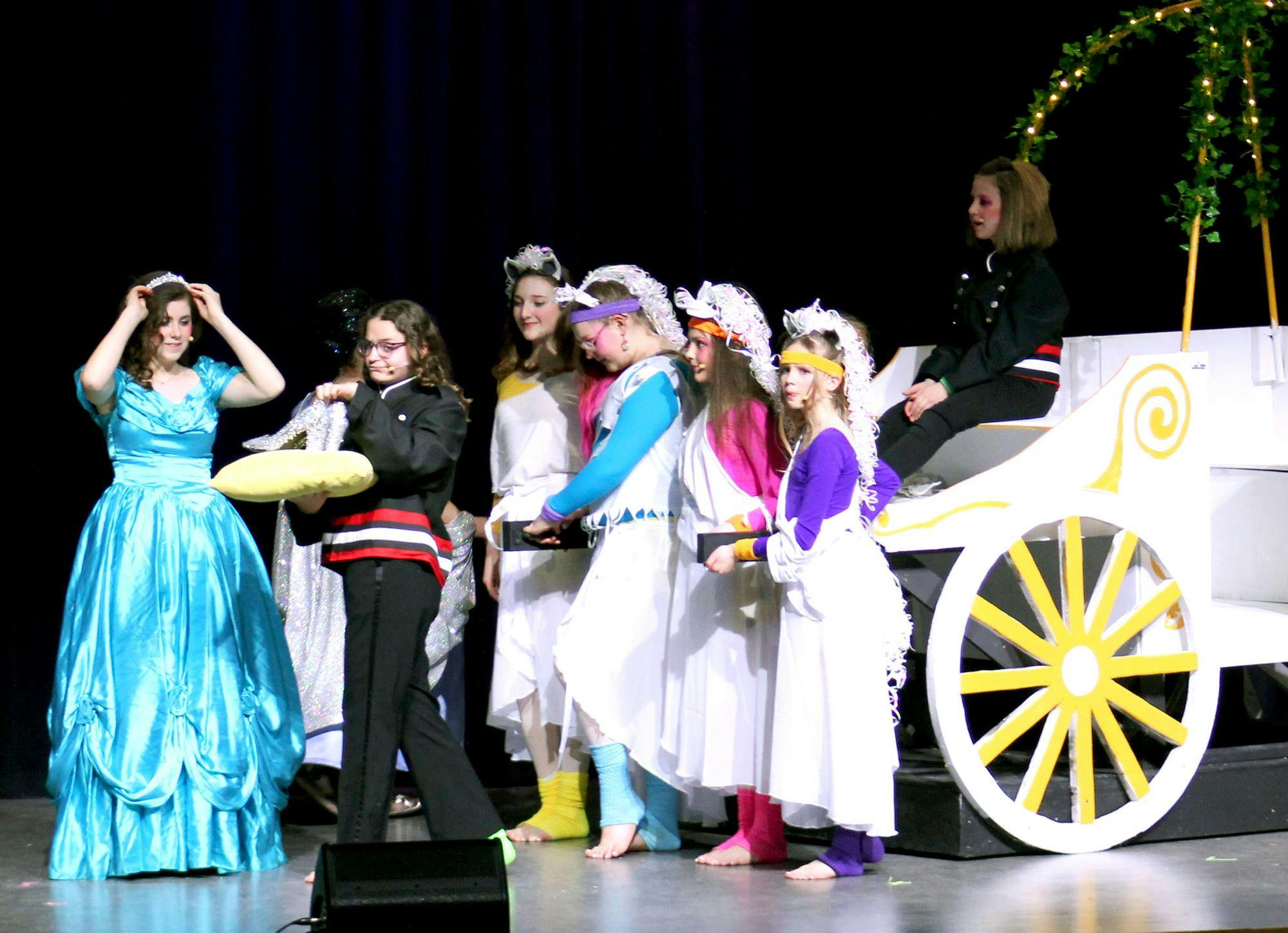
The ensemble certainly delivered, not just musically but also with physical humor that kept every inch of the stage lively and provided visual gags wherever the audience looked. According to Maggie, the students worked on music for a solid month before stage direction, blocking and memorization began in earnest, with choreography “sprinkled throughout” rehearsals. Said Maggie, “The emphasis is really more on vocal quality, diction and finding the punch lines or lyrical moments to highlight more than character development - there's simply not enough time!”
So many of the audience's favorite moments were put in motion by the students themselves.
As someone familiar with the costume storage shed, I was thrilled to see the hoard of donated '80s prom dresses put to good use, but as it turns out, almost every costume came from the storage shed - even the evil Stepmother’s power suit and Cinderella’s acid-wash overalls I considered stealing. However, Cinderella’s blue ballgown came from another theater company, as it not only looked the part, but could also fold properly for the transformation quick-change made popular by the musical. As for what sources and inspirations the crew drew upon for costumes, Maggie cited Princess Diana, Prince, McCall dress patterns and even parents stepping in as “1980s consultants” (which is how I will now be referring to my parents.)
When asked about her experience directing straight plays versus musicals, Maggie explained, “Straight plays are first and foremost about student growth through character development and script interpretation. You have to really push them to find emotional motivations for their characters and deep dive into the textual intent. Musicals are more of a gimmie - the songs will tell you exactly what each character is thinking. But they're a lot of fun and always popular and a wonderful opportunity for students to grow through singing and dancing and a great opportunity for the magic of stagecraft, as Cinderella displays so well.”
With such a solid ensemble, standout comedic roles and wonderful set pieces, there is much for the Hart Drama Club to be proud of. For Maggie, she is “most proud of the way this cast came together. We had students that live in Ludington, Pentwater, Hart, Shelby and Montague but they really bonded and looked out for one another. It was such a blast to see them having fun together onstage, especially in the last three weeks, and they learned to look out for one another, helping each other with lines and suggesting ideas, etc. That's the kind of cooperation and generosity of spirit I want to cultivate, rather than focusing on one or two talented individuals.”