There are 50 states in the union, and over half have Native American names. From the Ojibwe “Mishigamaw,” we derive the name “Michigan.” A trip up or down the lakeshore would uncover place names with similar origin stories: Manistee, Muskegon, Ottawa and Macatawa. The United States of America might have just celebrated its momentous 250th anniversary, but the land on which this country was formed has a human history reaching back millennia.
In 1821, the Treaty of Chicago was signed by the Michigan Territorial Governor and representatives from the Ottawa, Ojibwe and Potawatomi Native American tribes. This treaty ceded all Michigan lands south of the Grand River to the white settlers and displaced thousands of Indigenous peoples. Throughout the next several decades, Grand River Native Americans migrated throughout Michigan, searching for land to claim or purchase as their own, but with every new home came another document, ceding more and more of their land to the state.
Many of the Grand River Ottawa settled in Oceana County at a reservation in Elbridge Township, established in 1855. One of the many who found themselves in Elbridge and established a thriving community was Josette DeRosier, also known as Chippewa Que.
Josette was born to a Native mother and French settler father in either 1819 or 1829 around Torch Lake, Wisconsin, and her path to Elbridge spanned hundreds of miles of land and water. In the early 1830s, Josette, her mother and brother traveled by mail boat from Torch Lake, Wisconsin to Northern Michigan, then by canoe to Grand Haven, where the family eventually settled in 1835. This is the legend, of course, the first confirmable record of Josette is her 1847 marriage certificate to Peter DuVernay, a son of a prominent Grand Haven pioneer. Theirs was the first marriage performed at the Ottawa County courthouse. They remained married until Peter’s death, likely by hypothermia, in 1855, as was reported in the Grand River Times. They had two children together, Sophia and Frank.
With that heartache still fresh, Josette and the Native Americans who’d settled in Grand Haven were transferred to the Elbridge Reservation; but not before she met and married David Moon in Grand Haven. During their eight years together in Elbridge, three “Moon” (also sometimes spelled “Moan”) children were born: Sarah, Henry and Amanda. Henry Moon went on to become well-known in Hart as a local barber. Josette, David and their children constructed and lived in the “frame-built house” in Elbridge, as reported in her obituary published in one of the local newspapers of that time. David Moon preceded Josette in death in 1866, soon after which she married her final husband, Henry Robinson.
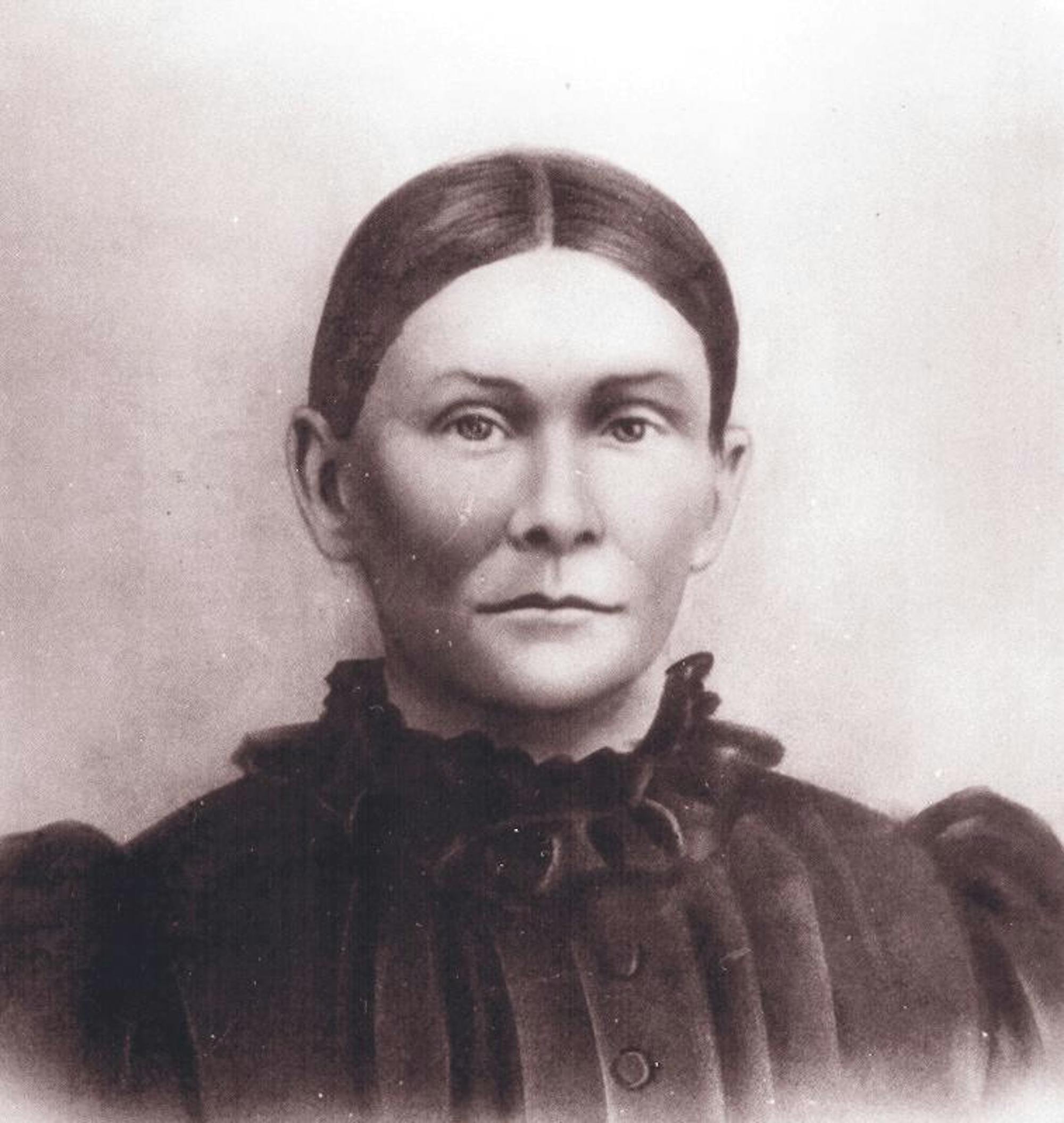

Josette and Henry Robinson were both each other’s third spouses, and all of Henry Robinson’s wives were of the Grand River tribe. Josette had two more children with Henry Robinson - Mabel Jane and Kate Bell - joining Henry’s other five children and Josette’s four surviving children. Undoubtedly, Josette had other children who did not survive to adolescence.
Plenty of women in the 19th century had seven or more children, but Josette was well-loved and respected throughout Oceana County through her work as a midwife, aiding the women of rural Michigan through births that were all too commonly fatal during this time. In her later years, she was a frequent collaborator with Dr. L.P. Munger, who called on her expertise to assist in the eastern reaches of the county and noted her “tough and devoted resolve.”
That same obituary claims that “perhaps no other woman of Indian blood has been more respected and generally beloved than was Mrs. Robinson,” and described her as having, “a very kind disposition and her generous heart made friends for her by the score wherever she went.” Of her medical talents, “the sick and suffering always desired ‘Grandma’ Robinson as a nurse, and she was never known to refuse aid whenever it was possible for her to render it.”
Josette died in Elbridge on April 17, 1904, over 300 miles from where she was born in Wisconsin and several counties away from where her tribe had lived. Her funeral was held at the Elbridge Township Hall and she is buried in the township's cemetery. The county mourned her passing, and she was put to rest by hundreds of her friends and neighbors.
She was survived by six of her children, Henry Robinson (who did not remarry) and her brother, John Parisien. John remained in Grand Haven and was well-known by most everyone in the city at the time. As such, Josette’s death was noted in the Grand Haven Tribute, the article’s author, George W. McBride, recounting the story of her family’s journey from Wisconsin. McBride romantically describes the tableau, “The frail canoe, with mother and son and daughter, gliding over the rippling waters of the great lake…,” and Josette, “the dark-skinned girl, lithe and graceful as a fawn, balancing herself, corresponding with the tossing motions of the canoe” - more legend than near-past.
McBride likewise describes Parisien and the other Native Americans, “What mighty changes have been wrought within the lifetime of this man. The race from which his mother sprang has practically vanished. In its stead has appeared a restless and vigorous life, void of the beauty and the simplicity of the Chippewas, but charged by the Creator with a mission of mercy to the Millions.”
Today, there are still 6.49 million Native Americans living in the United States, with 172,295 in Michigan alone. Millions more Americans can claim distant relation to those that lived in the country 250 years ago.
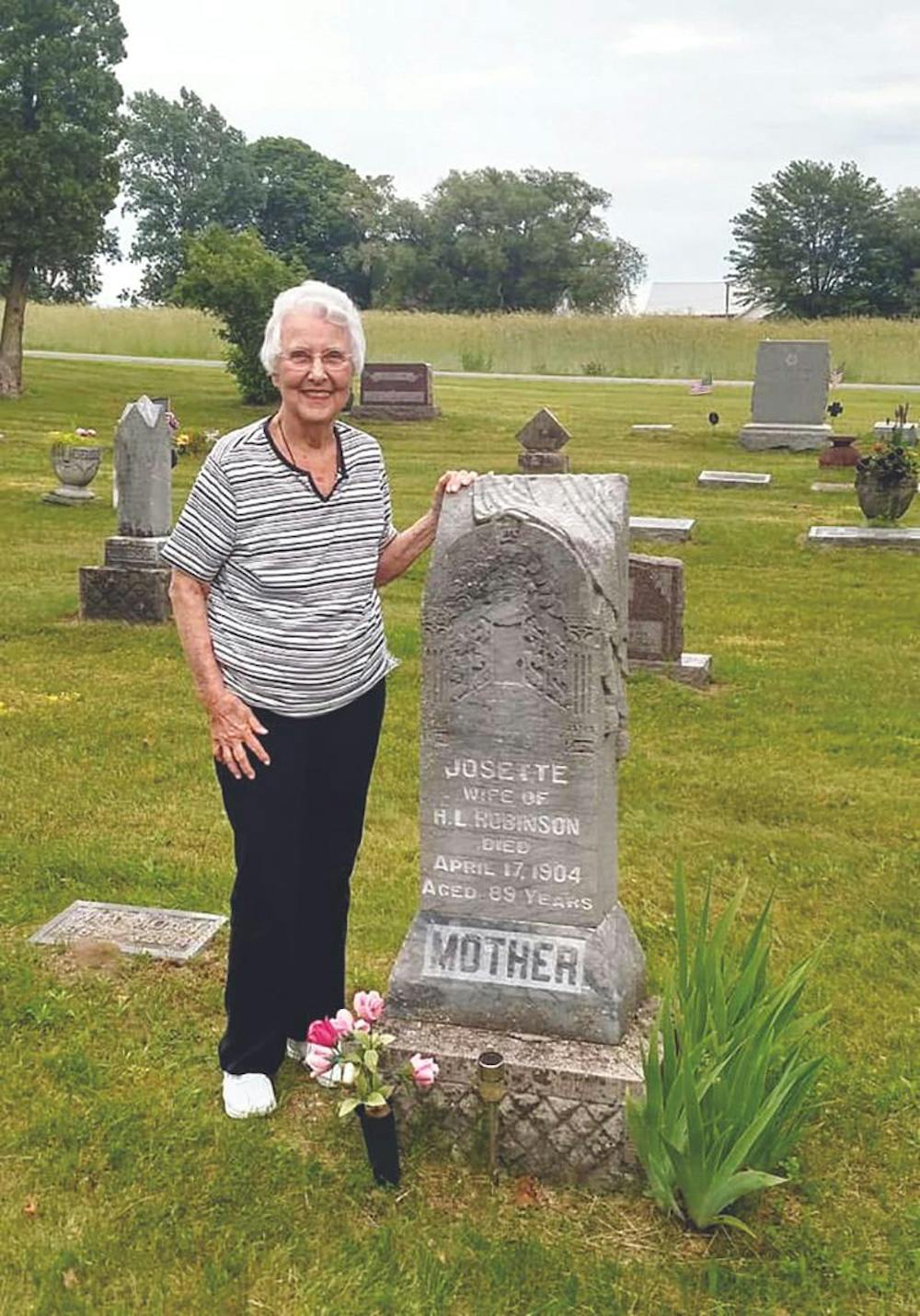
Marge Peterson of Hart, who, at 96, is one of the oldest direct relatives of Josette, recalls a time when she didn’t dare let her neighbors know she had “Indian blood,” as she described it. Growing up in New Era, Marge explained that many in the village wanted to avoid associating with "anything not Christian.”
All these years later, however, Marge is proud of her heritage, an American with Indigenous ancestry. “I am proud. I am very proud to be a part of that” - “that” being the legacy of the Native Americans who built up Elbridge Township - and, despite her fear of ostracization from her neighbors, her family held onto that pride. “I was never made to feel like I shouldn't be [proud].”
She noted in her family history records about the prominent placement of Josette’s obituary, “For an Indian woman to be on the front page speaks in a million ways how important she was to the community.”