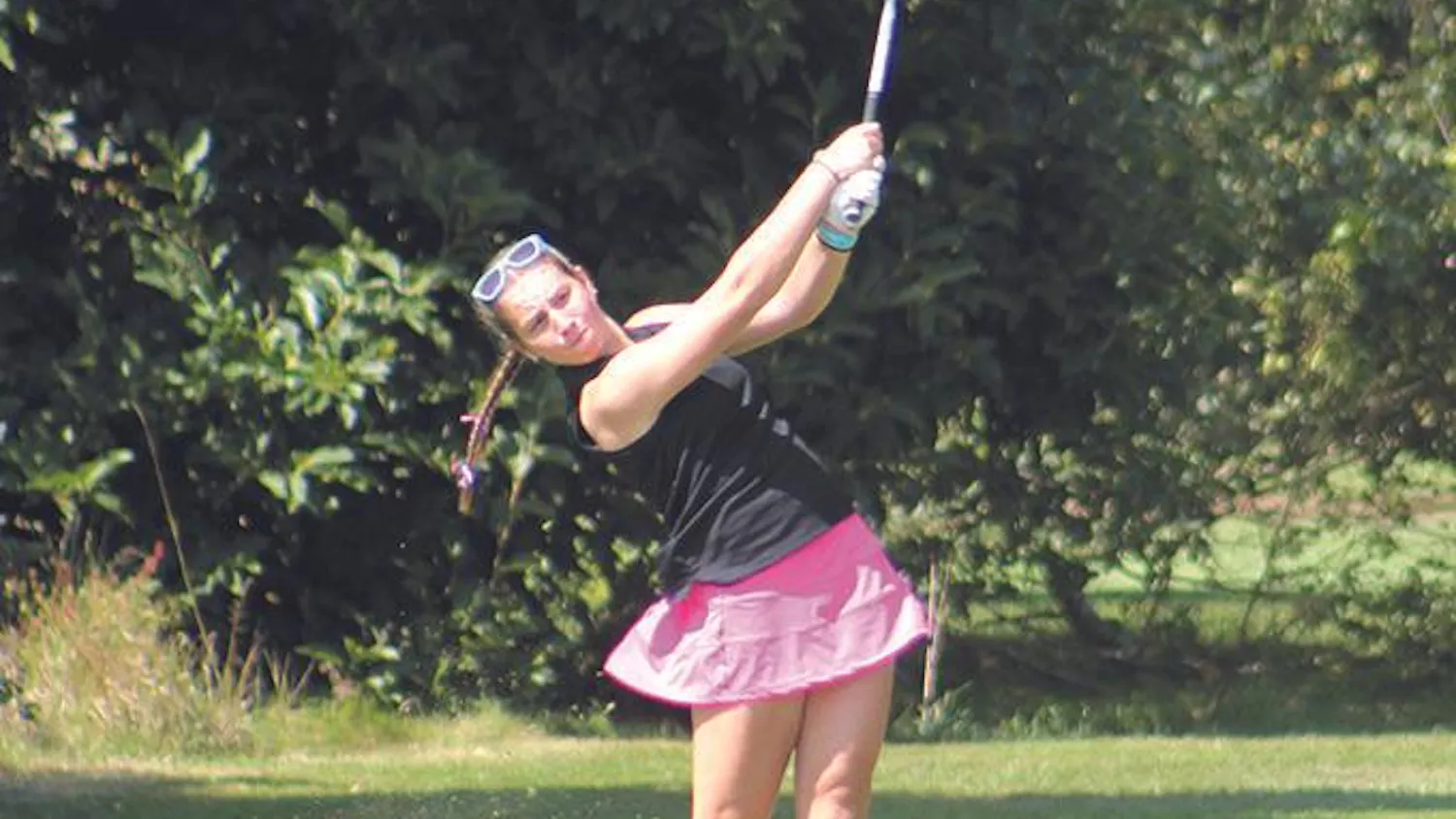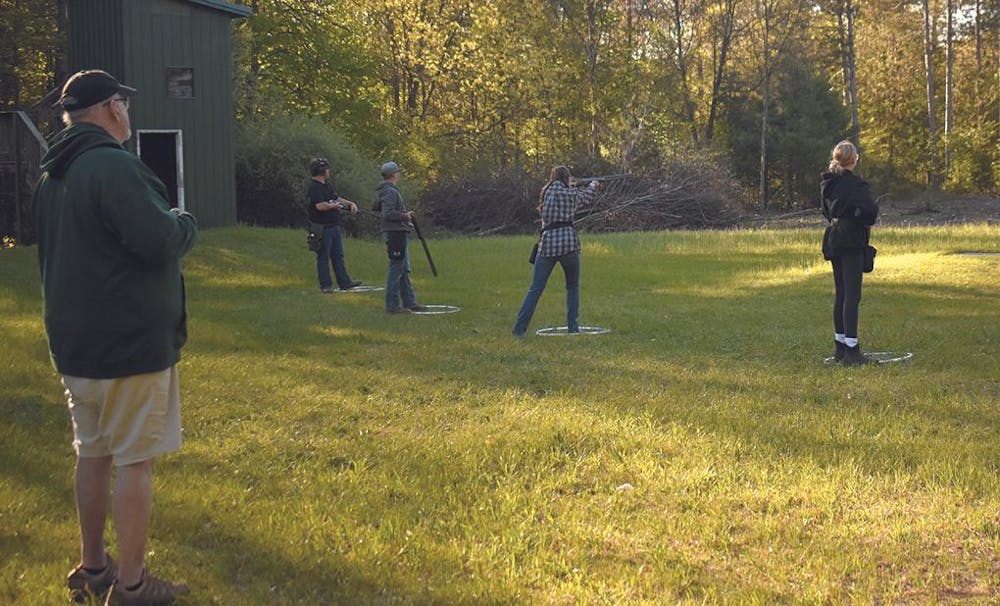
PENTWATER — Seven Pentwater students joined forces this year for the first competitive shooting team in Oceana County, and students and organizers alike hope it’s the start of something bigger.
The genesis of the program came when Erik Bengston was with Ted Butz, Mike Curtis and Hank Thiele at Hart Long Rifles, located on Jefferson Road. The trio said they’d like to get a youth shooting group going, and Bengston said he could help them get it started. He already had plentiful coaching experience in multiple sports from his time living in Fremont before moving to Oceana County in 2021, and a life full of hunting and shooting with his dad and brother gave him a background on which to draw.
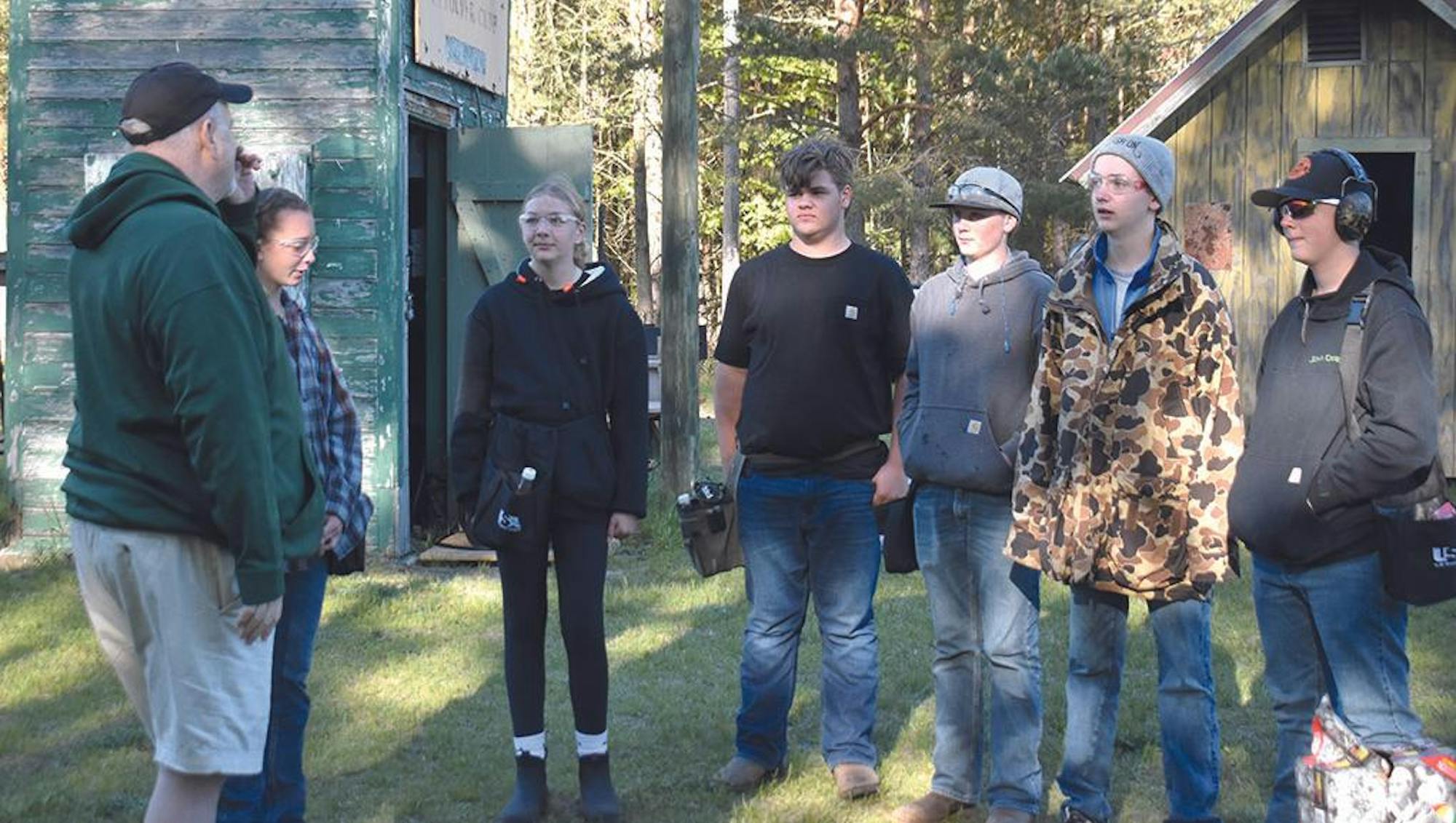
He approached the Pentwater school board over the winter for permission to use the Pentwater name, which was granted - the school does not sponsor the club - and then began recruiting students from the seventh through 12th grade levels. Nine signed up at first, and eventually seven joined the team after completing a required online course, which they do with either the Michigan Department of Natural Resources or through the USA Clay Target League.
The Jorissen siblings - Maggie, Colton and Ben - joined, along with Colton’s friend Carson Stine, Carson’s sister Sierra, and fellow Falcons Olen Orde and Jamison Clark.
The Jorissens are a family of hunters, so their involvement was unsurprising, but Carson had never shot before; he just wanted to give it a try. Sierra followed, as did Orde and Clark.
Butz has long been an advocate of teaching shooting and the responsible use of guns, and said he in fact used to do so through a school district many years ago. He also taught his own kids. Teaching a new group of Pentwater Falcons seemed a natural next step.
“I’m from Indianapolis, and I have several friends that had high school trap and skeet teams,” Butz said. “We got up here and we thought, ‘Why don’t we try to do the same thing here?’
The group competed under the umbrella of the USACTL’s umbrella. Pentwater was placed in the 1A division, which Bengston said consisted of teams with 20 or fewer competitors, and further divided into conferences with other teams of similar size - Bengston said he believed the closest geographically was Reed City.

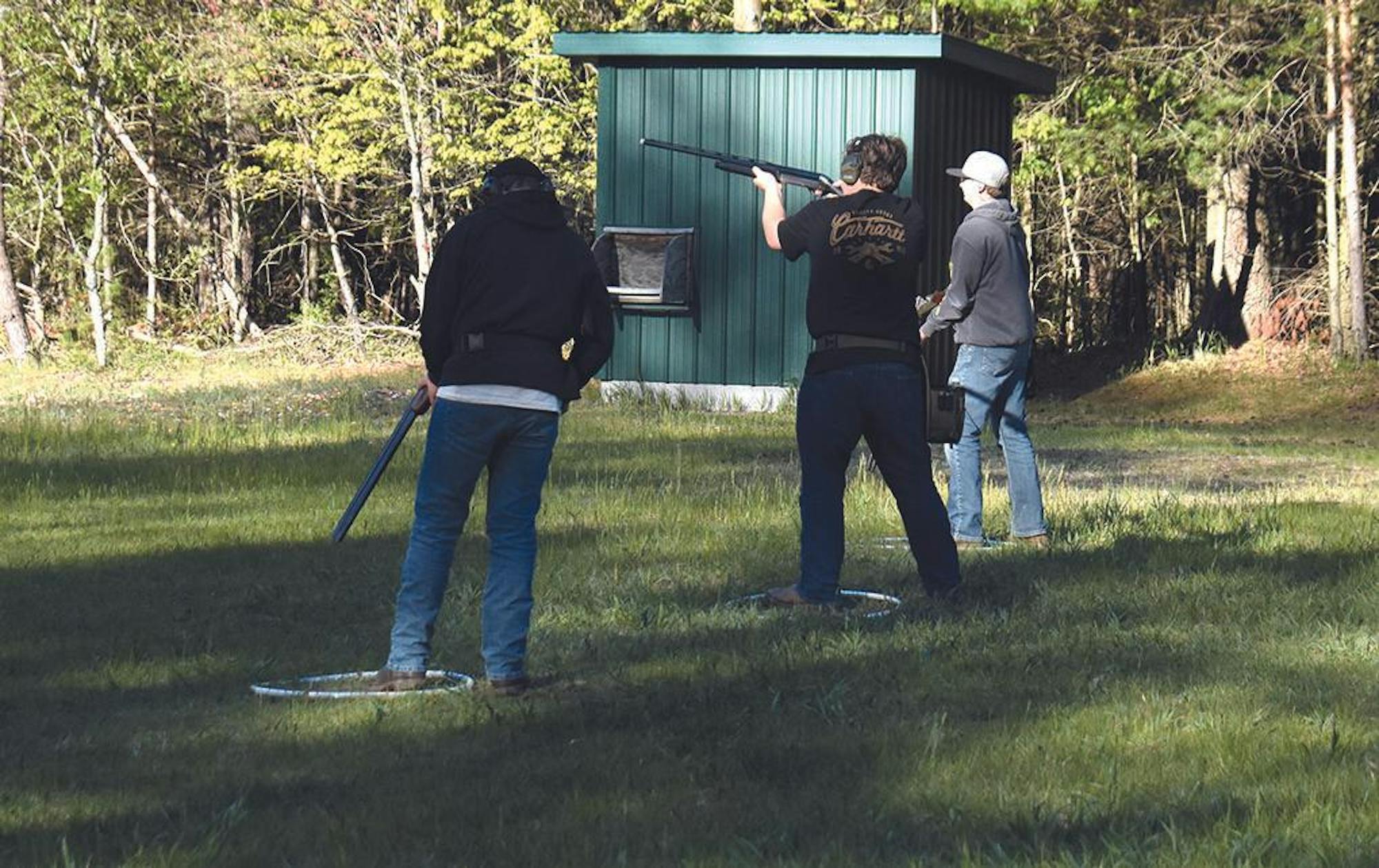
There are four shooting disciplines in Michigan clay target competitions, but the Pentwater team concentrated on two - trap and skeet. Of the two, trap is far more common among high school competitors in Michigan, with over 100 teams compared to 45 in skeet. This is likely due to trap being much easier to set up.
“A trap range has got five positions and a house (from which the targets are thrown),” Thiele said. “You can have a 100-foot piece of property and shoot right within that. Skeet, you’ve got (eight) stations, a high house and a low house. You’ve got a lot more equipment. You’ve got two (target-throwing) machines instead of one. You’ve got the stations...Trap fields you can set up in your backyard, basically. Skeet, it’s like setting up a tennis court.”
In trap shooting, the competitor is stationary while machines throw clay targets in several different directions, and in skeet shooting, it’s the reverse, with the targets always thrown the same directions while the shooter moves around in a circle.
Competitions are not head-to-head in the traditional sense, outside of the state meet, which took place in Mason in June. Teams do not travel to each other’s ranges to face off. Instead, teams compete at their own ranges and log their scores in a database to compare with one another; Bengston said one of the team parents is certified as a scorer.
Competitors shoot at 50 targets in a week’s event and are placed in one of three divisions - novice, JV or varsity - based on their scores. Scores are reported on the honor system, though as Bengston noted, there’s incentive to be honest because a novice-level competitor with falsely reported high scores would be in for a rude awakening at the state meet.
Of the seven Falcons to compete this year, most were novice-level shooters, which was expected given their lack of experience in organized shooting. Even the Jorissens, who have grown up hunting, found there was an adjustment.
“Hunting, you usually sit still and shoot at one spot,” Colton Jorissen said. “For skeet and trap, it was a lot more moving and shooting.”
Jamison Clark was the highest-performing Falcon overall, earning the JV designation in skeet shooting and placing in a tie for 24th out of 45 boys in the discipline at the state meet, with 70 points. (Lakeville Memorial’s Travis Eickhoff won with 82 points.) Clark, who has shot skeet for fun in the past, said he felt like he improved throughout the season in the structured team environment.
“I really felt like I got a lot better than when I just shot for fun,” Clark said. “I think the experience is going to help a lot more (in the future). Now that we’ve done it the first time, knowing what we’re doing and how to do it is going to be able to give us more of a jump start on how fast we can learn new things.”
Maggie Jorissen also enjoyed success at the state level. Competing in the novice division in trap shooting, Maggie placed 15th out of 46 competitors with a total score of 54 (Memphis’ Ruth Pingley was first, with 71 points).
Safety is, for obvious reasons, a primary concern when dealing with shooting sports, but Pentwater was in luck there thanks to Butz, Curtis and Thiele’s experience.
“One of the things that Hank has always stressed, even when I first met him is safety. Safety first, always safety,” Butz said.
“Every day, it’s the first thing we do,” Bengston added. “We talk about what was potentially unsafe from the time before and how to be safer this time.”
Bengston said the USACTL began in 2008 and has reported no serious injuries in that time, despite the potential for danger. He credited that to stringent safety regulations the organization puts in place, with every range used required to have a safety officer, as well as two coaches and a scorekeeper who are trained in safety. No more than five people may be shooting at targets at a given time, which makes it easier for the adults to keep track of things.
Through time working with Bengston and the Hart Long Rifles folks, the young Falcon shooters have not only gotten better but learned more about how to get better. One example, Bengston said, is Sierra Stine, whom he discovered is left eye dominant despite being right-handed, a combination he said is unusual.
“We had to teach her how to make her right eye dominant over time,” Bengston said, adding that they briefly taped over her eye until she was able to close it herself. “Most people, when they shoot, have both eyes open, so we had to get her to keep her (right eye closed), then have her learn how to do that.”
The students on the team have gotten some other coaching outside their home base. Butz has helped arrange time for them at the North Ottawa Rod and Gun Club, located in Grand Haven, to work with trap and skeet instructors. Butz calls it “skeet camp and trap camp.” Another trip south is planned for early next week for the kids to keep improving.
“They’ve been willing to shoot and willing to learn, and I think with the parental involvement and support, that’s really made a difference,” Butz said.
Bengston said the team generally shot 50-100 targets at a practice, and he’d like to see that number be more like 300 to help facilitate their improvement.
In the future, the group that Bengston helped start the club will continue to work with it, and plans to launch a nonprofit called West Michigan Scholastic Shooting Sports to support the efforts. Bengston would love to see more county schools launch similar teams.
“It seems like we had some good momentum, and we’ll see how it goes,” Bengston said. “My hope for the future is all the county high schools would be involved and have a team. I’d love to propose it to a different school.”