Perhaps readers have noticed how often the surveys required at medical appointments include questions regarding a patient’s emotional state of mind, a patient’s concerns about meeting their basic physical needs or the health of family relationships. This may be a result of the increase in mental health services needed since the Covid pandemic or an increase in sensitivity to the connection between physical and mental health.
The impact of each on the other (physical/mental) may be obvious, subtle or unrecognizable. But the option for professionals in both fields to make referrals to one another benefits the patients. That valuable cross-referral is available in Oceana County because of the professional mental and behavioral health agencies that serve the county.
Fountain Hill Center, whose main office is in Grand Rapids, has a satellite office in New Era, from which they provide services to Oceana County. They serve individuals who contact them for help, but they also work with clients referred to them from churches, schools, Child Protective Services (CPS) and family court. The latter can request marriage counseling, substance abuse or child abuse counseling, or preventative support. There are also companies and businesses that offer employee benefits that include counseling services.
Executive Coordinator and Therapist Amy Van Gunst divides her time between the Grand Rapids and New Era offices, spending two days a week in New Era. In addition to the two full-time therapists in New Era, there are three interns. Van Gunst reports, “We have an established intern program with participants coming from public and private universities that include Western Michigan University, Central Michigan University, Valparaiso, Cornerstone University and three different seminaries. The interns work for two semesters of a school year under my supervision. By state protocol they cannot be paid a salary, but we do provide them with mileage reimbursement. Some of them have become our employees after they graduate.”
A state program specific to Fountain Hill for Oceana County is the Court Appointed Special Advocate (CASA) program. CASA provides 30 hours of training for volunteers to become advocates for children in foster care. The volunteers work with parents, children and foster parents to be able to present a clear picture of circumstances in court and advocate for the children to enable the court to make the best decisions for the child’s welfare. “We can always use more volunteers for this important role,” Van Gunst said.
Advancement Coordinator Sara Binkley added, “That’s especially true because we are expanding the CASA program into Mason County. Bart Demeter coordinates our program in Oceana County. Pam Howe will be our coordinator in Mason County beginning in April.”
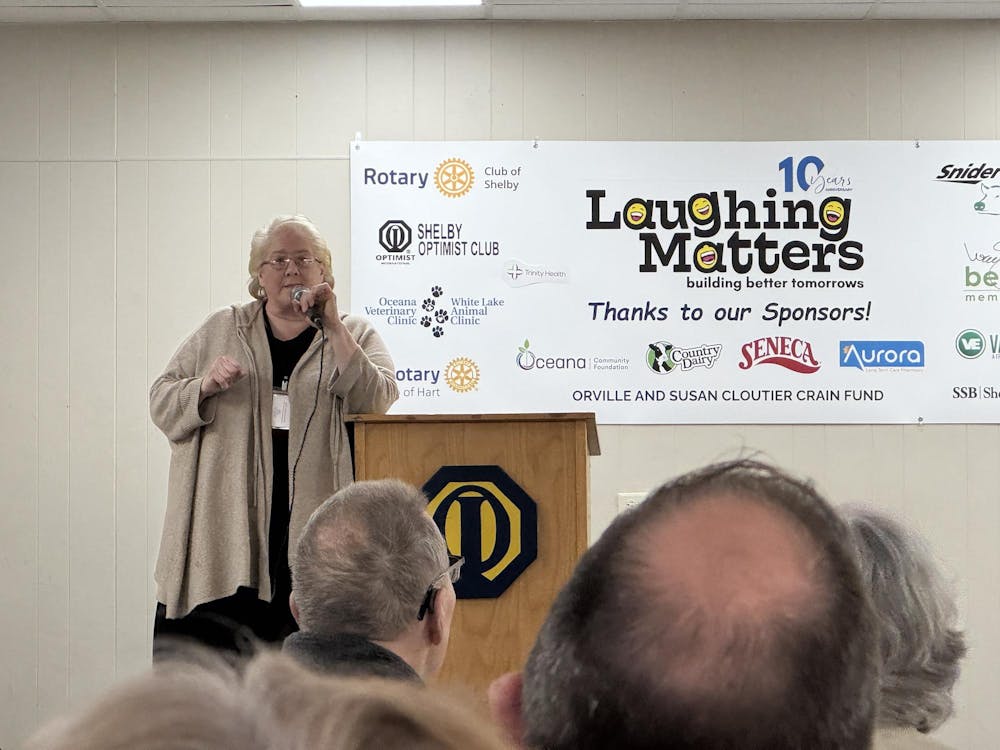
Client fees are determined on a sliding scale basis. “But we never turn anyone away for an inability to pay,” Van Gunst reports. “Client fees are supported with state funds and grants. The Oceana office administrative infrastructure is paid for by the Grand Rapids office. Every dollar raised in Oceana County funds Oceana services. Our biggest fundraiser is a comedy and dinner event called ‘Laughing Matters’ that we initiated a decade ago. It covers 30-40% of our annual budget in Oceana.”
Fountain Hill Center has strong ties to both Kent County and Oceana County through therapists who have permanent or vacation homes in Oceana County. Van Gunst’s parents own Country Dairy in New Era.
West Michigan Community Mental Health Services (CMH) provides programs to Mason, Lake and Oceana Counties. The central office is located on Lincoln Street in Hart with satellite offices at 920 Diane St. in Ludington and at 1090 N. Michigan Ave. in Baldwin. To serve this large population, CMH employs a team of 130 therapists, clinicians, technicians and peer support personnel. Julia Rupp is the recently hired CEO, and Lori Schummer is the public relations administrative assistant and media spokesperson. CMH works with children and adults for a variety of challenges.
“We meet people where they are," affirmed Schummer. “That means geographically and mentally. We will meet them in our offices, in their homes, on the telephone and in our urgent care clinic.”
Their website lists three main focuses: mental illness, intellectual and developmental disorders, and substance abuse disorders. But in addition, they offer programs for veterans, smoking cessation, family support and emergency help. “We have a mobile crisis service available 24/7 and can send someone immediately to help resolve situations,” Schummer reported. “We have a Behavior Health Urgent Care (BHUC) walk-in clinic in Ludington as well. We utilize a large referral list to help people access services we do not provide, such as marriage counseling.”
The demand for services changes with locations and with the times. “Currently the opiate crisis demands a lot of attention,” Schummer shared. “To help combat the crisis, we have vending machines in the lobbies of all three of our offices. They provide free fentanyl test strips (no questions asked) and free Narcan dispensers to treat overdoses.”
As at Fountain Hill, fees are determined on a sliding scale, but no one is turned away for financial reasons. CMH receives federal and state funding as well as grants.
Schummer is grateful for a grant from the Oceana Community Foundation (OCF), which is enabling CMH to present a training on April 30 at the MSU extension service facility on Oceana Drive. The training is open to anyone who serves the Hispanic population in our community and aims to build bridges to better behavioral health. It is called “Hispanic Stigma Reduction Training," geared to understanding the culture and being of better service. CMH extended invitations to churches, schools, libraries and businesses in their service area. The training is scheduled from 8 a.m. to 1:30 p.m. and provides attendees a light breakfast and lunch. It is free, thanks to the OCF grant. Interested persons can register at HispanicSRT.eventbrite.com.